Are you ready to share your Android app with the world? A Google Play Developer Account is your key to publishing on the Google Play Store, reaching millions of users globally. This beginner-friendly guide walks you through every step to set up an account, pay the $25 registration fee, and upload your app. With easy steps, optimisation tips, and strategies to pass Google’s review, you’ll be publishing like a pro in no time. Let’s get your app live!
Why Publish on Google Play?
The Google Play Store, with over 2.5 billion active users, is a top platform for developers to:
- Reach a Global Audience: Distribute your app to Android users worldwide.
- Earn Revenue: Offer free apps, paid apps, in-app purchases, or subscriptions.
- Build Credibility: A Play Store listing adds professionalism to your app.
- Access Analytics: Track downloads, revenue, and feedback via Google Play Console.
Prerequisites for Getting Started
Before you start, ensure you have:
- Google Account: Required to access the Google Play Console.
- Payment Method: A debit/credit card (e.g., Visa, Mastercard) for the $25 fee.
- App Files: An Android App Bundle (.aab) or APK, built using Android Studio.
- App Assets: App icon (512×512 px), screenshots, feature graphic, and descriptions.
- Stable Internet: Reliable Wi-Fi or data for account setup and uploads.
- Device: A computer or smartphone to access the Google Play Console.
Step 1: Create a Google Account
A Google Account is essential for the Google Play Console. If you don’t have one, follow these steps:
- Visit the Google Account Creation Page:
- Go to accounts.google.com.
- Click “Create account” and select “For myself” or “To manage my business.”
- Enter Your Details:
- Provide your first and last name.
- Create a username (e.g., yourname@gmail.com).
- Set a strong password (8+ characters, mix of letters, numbers, symbols).
- Tip: The first letter of the password isn’t case-sensitive on mobile devices.
- Verify Your Account:
- Add a phone number for security.
- If using a non-Gmail email, verify it with a code sent to that email.
- Add Recovery Information:
- Set a recovery email and phone number to secure your account.
- Tip: Use reliable contact details for easy account recovery.
- Complete Setup:
- Click “Next” and accept Google’s Terms of Service.
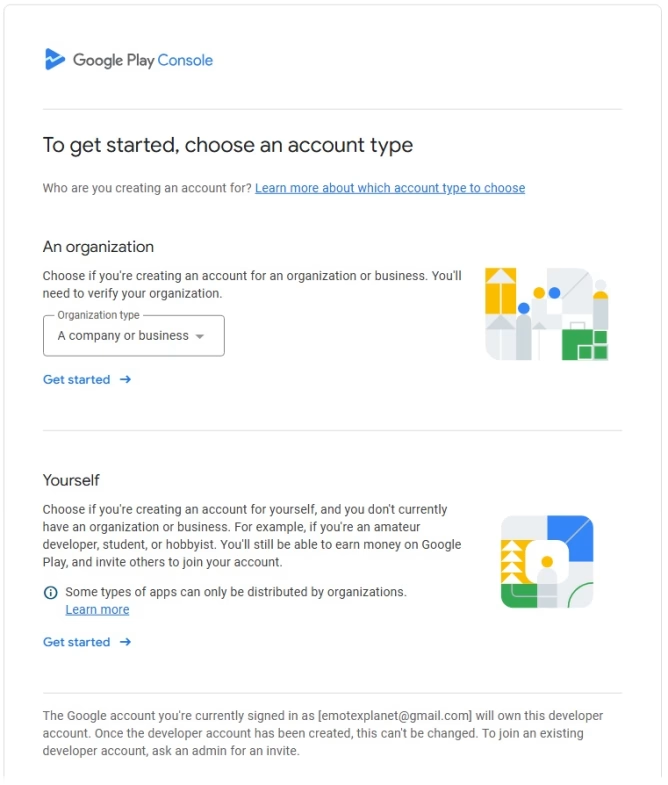
Step 2: Set Up a Google Play Developer Account
Create your Google Play Developer Account in the Google Play Console:
- Visit the Google Play Console:
- Go to play.google.com/console.
- Sign In:
- Log in with your Google Account credentials.
- Accept the Developer Agreement:
- Read the Google Play Developer Distribution Agreement.
- Check the box to accept and click “Continue to payment.”
Step 3: Pay the $25 Registration Fee
The Google Play Developer Account requires a one-time $25 fee:
- Set Up Google Wallet:
- You’ll be redirected to configure a Google Wallet for payment.
- Enter Personal Information:
- Provide your full name, address, and phone number.
- Add Payment Method:
- Enter debit/credit card details (e.g., Visa, Mastercard).
- Tip: Ensure your card supports international transactions. Some banks may charge a small processing fee.
- Pay the Fee:
- Confirm the $25 payment.
- Click “Accept and continue.”
- Verify Payment:
- Check your bank statement or email for the transaction confirmation (e.g., “Google Play Dev Fee”).
- Processing typically takes 1–2 days.
Step 4: Configure Your Developer Profile
Set up your Developer Profile to complete your account:
- Enter Developer Details:
- Developer Name: Choose a name for your Play Store listing (e.g., “AppCrafters” or your brand).
- Contact Email: Provide an email for user inquiries (e.g., support@yourapp.com).
- Phone Number: Add a contact number.
- Address: Enter your physical address for verification.
- Complete Registration:
- Click “Complete registration.”
- Tip: Choose a professional Developer Name to build user trust.
Step 5: Set Up a Payments Profile (Optional)
If you plan to sell apps, in-app purchases, or subscriptions, create a Payments Profile:
- Navigate to Payments Settings:
- Go to Setup > Payments profile in the Google Play Console.
- Enter Business Information:
- Legal Name: Your business or personal name if unregistered.
- Address: Your address.
- Authorized Representative: Name, email, and optional phone number.
- Website: Your app or business website (e.g., www.yourapp.com).
- Product Category: Select your app’s category (e.g., Education, Games).
- Customer Support Email: For user queries.
- Link a Bank Account:
- Add a bank account for payouts.
- Verify with Google to ensure smooth transactions.
- Submit:
- Click “Submit” to create the profile.
Step 6: Prepare Your App for Upload
Ensure your app meets Google Play requirements:
- Build Your App:
- Use Android Studio to create an Android App Bundle (.aab) (preferred) or APK.
- Sign your app with a release key (developer.android.com).
- Choose App Signing Method:
- Google Play App Signing: Let Google manage your signing key for security (recommended).
- Manual Signing: Use your own key, but store it securely (e.g., on a password-protected drive).
- Tip: Google Play App Signing simplifies updates and enhances security.
- Prepare App Assets:
- App Icon: 512×512 px, PNG, vibrant design.
- Screenshots: 2–8 images (JPEG/PNG, 320–3840 px) showing key features.
- Feature Graphic: 1024×500 px for the Play Store listing.
- Descriptions:
- Short Description: 80 characters (e.g., “Fun quiz app for all!”).
- Full Description: 4,000 characters, with keywords like “Android app,” “quiz app.”
- Promo Video (optional): YouTube link showcasing your app.
- Test Your App:
- Test on Android Emulator or physical devices to ensure functionality.
- Verify compliance with Google Play policies (play.google.com/about).
- Tip: Test with various screen sizes and Android versions for broad compatibility.
Step 7: Prepare for Google’s App Review Process
Google reviews all apps to ensure quality and compliance. Prepare to pass the review:
- Check Policy Compliance:
- Avoid restricted content (e.g., violence, misinformation) per Google Play Policy Center.
- Ensure proper permissions (e.g., no unnecessary access to camera or location).
- Test Thoroughly:
- Verify app functionality (e.g., no crashes, smooth navigation).
- Use Google Play Console > Internal testing to test with a small group.
- Complete All Requirements:
- Ensure store listing, content rating, and pricing are filled.
- Provide clear screenshots and descriptions explaining your app’s purpose.
- Understand Review Timelines:
- Reviews take 1–7 days; first-time submissions may take longer.
- Tip: Submit early and monitor your email for review updates.
Step 8: Upload and Publish Your App
Upload your app to the Google Play Store:
- Create a New Application:
- Go to All apps > Create app in the Google Play Console.
- Select the default language (e.g., English).
- Enter the app title (e.g., “Global Quiz”).
- Click “Create app.”
- Complete the Store Listing:
- Go to Store presence > Main store listing.
- Add short and full descriptions with keywords (e.g., “Android app,” “quiz app”).
- Upload app icon, screenshots, and feature graphic.
- Select the app category (e.g., Education, Games).
- Provide contact details (email, optional website, phone).
- Set Up Content Rating:
- Go to Store presence > Content rating.
- Complete the questionnaire to get a rating (e.g., Everyone, Teen).
- Save and submit.
- Configure Pricing and Distribution:
- Go to Monetisation setup > Pricing & distribution.
- Choose free or paid (e.g., $0.99).
- Select countries for distribution (e.g., worldwide).
- Specify if the app is suitable for children or contains ads.
- Tip: Free apps with ads or in-app purchases often attract more users initially.
- Upload Your App Bundle or APK:
- Go to Release > Production.
- Click “Create new release.”
- Upload your .aab or APK file.
- Enable Google Play App Signing if desired.
- Add a release name (e.g., “v1.0”) and release notes (e.g., “Initial release”).
- Click “Save” and “Review release.”
- Review and Publish:
- Go to Publishing overview.
- Ensure all fields (store listing, content rating, pricing) are complete.
- Click “Start rollout to production.”
- Confirm the rollout.
- Note: Google reviews apps within 1–7 days.
Step 9: Optimise Your App Listing for Discoverability
Boost visibility with App Store Optimisation (ASO):
- Keyword Strategy:
- Use keywords like “Android app,” “free quiz app,” or “learn coding” in your title (max 50 characters) and description (2-3% density).
- Example Title: “Global Quiz: Free Learning” (25 characters).
- Localise Content:
- Add translations for key markets (e.g., Spanish, French) to reach more users.
- High-Quality Assets:
- Use clear screenshots showcasing features (e.g., quiz gameplay).
- Design a vibrant feature graphic to attract attention.
- Encourage Reviews:
- Prompt users to rate after positive actions (e.g., completing a level).
- Respond to reviews to build trust.
- A/B Testing:
- Use Google Play Console > Store listing experiments to test icons, descriptions, or graphics.
- Update Regularly:
- Release updates to fix bugs and add features, improving rankings.
- Tip: Monitor keyword performance in Google Play Console to refine your ASO strategy.
Step 10: Manage App Updates
Keep your app competitive with regular updates:
- Fix Bugs:
- Monitor Quality > Android vitals for crash reports.
- Release patches to improve stability.
- Add Features:
- Use user feedback from Reviews to prioritise new features (e.g., dark mode, offline support).
- Update Store Listing:
- Refresh screenshots or descriptions to highlight new features.
- Run A/B tests to optimise conversions.
- Roll Out Updates:
- Go to Release > Production > Create new release.
- Upload the updated .aab or APK.
- Add release notes (e.g., “v1.1: Added offline mode”).
- Start rollout to production.
- Tip: Use staged rollouts in Google Play Console to test updates with a small user group before full release.
Step 11: Post-Publishing Steps and Marketing
After your app goes live:
- Monitor Feedback:
- Check Google Play Console > Reviews to respond to user comments.
- Address negative feedback to improve retention.
- Analyze Performance:
- Use Statistics to track downloads, revenue, and user demographics.
- Monitor crash reports in Quality > Android Vitals.
- Market Your App:
- Share on social media platforms (e.g., X, Reddit, LinkedIn).
- Collaborate with tech blogs or influencers for reviews.
- Run targeted ads on Google Ads or social media.
- Update Your App:
- Fix bugs and add features based on user feedback.
- Consider seasonal updates (e.g., holiday-themed content).
- Stay Compliant:
- Regularly review Google Play policies to avoid suspension (play.google.com/about).
Troubleshooting Common Issues
- Payment Declined:
- Ensure your card supports international payments.
- Verify sufficient funds ($25 + possible bank fees).
- Try an alternative card or payment method.
- Account Verification Delays:
- Check Developer Profile details (name, address, phone).
- Respond to Google’s verification emails promptly.
- App Rejection:
- Review the rejection email for issues (e.g., policy violations, crashes).
- Fix problems (e.g., remove restricted content) and resubmit.
- Check Google Play Policy Center.
- Slow Uploads:
- Use a stable internet connection.
- Compress assets (e.g., screenshots) to reduce file size.
- Listing Errors:
- Complete all fields (description, screenshots, content rating).
- Use high-resolution images (no blurry assets).
- Avoid keyword stuffing in descriptions.
- Low Visibility:
- Optimise keywords and encourage 5-star reviews.
- Run A/B tests to improve store listing performance.
- Payout Issues:
- Verify the Payments Profile and bank account details.
- Contact Google support if delays persist.
Conclusion
Creating a Google Play Developer Account and uploading your app is an easy process for developers worldwide. For just $25, you can set up your account, prepare your app, and publish it to millions of Android users. By optimising your listing, managing updates, and marketing strategically, you can grow your app’s success. Start today and share your app with the world!
For more app development tutorials, visit Nicrobit.
FAQs
Q: How much is the Google Play Developer Account fee?
A: It’s a one-time $25 fee, payable with a debit/credit card.
Q: How long does it take to set up a Google Play Developer Account?
A: Setup takes 10–30 minutes, but payment processing may take 1–2 days.
Q: Why was my app rejected by Google Play?
A: Common reasons include policy violations, crashes, or incomplete listings. Review the rejection email and resubmit after fixes.
Q: Do I need a Payments Profile for free apps?
A: No, it’s only required for paid apps or in-app purchases.
Q: How can I promote my app globally?
A: Share on social media, collaborate with tech blogs, and run targeted ads on Google Ads or social platforms.
Q: How do I appeal an app suspension?
A: Go to Google Play Console > Policy status, address the issue, and submit an appeal.
Q: How can I improve my app’s ranking?
A: Use relevant keywords, high-quality assets, and encourage 5-star reviews.
Q: What should I do if my app crashes after publishing?
A: Check Android vitals in Google Play Console, fix bugs, and release an update.
Q: Can I publish multiple apps with one account?
A: Yes, one Google Play Developer Account allows unlimited app publications.
Q: How often should I update my app?
A: Update regularly to fix bugs, add features, and stay competitive, ideally every 1–3 months.