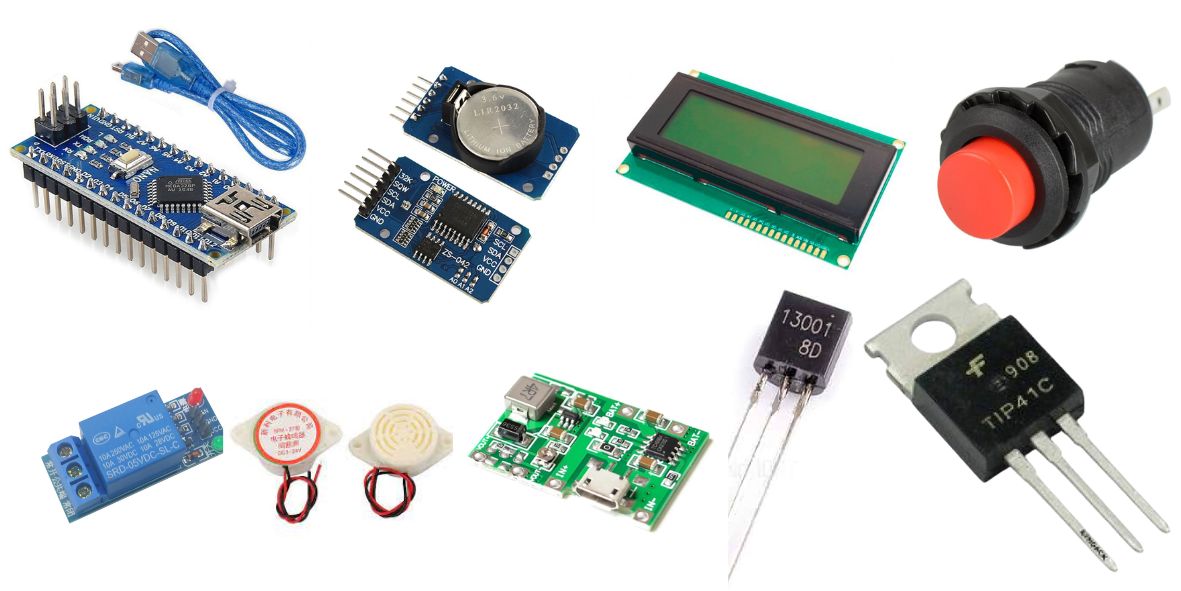

In today’s fast-moving, technology-driven world, electronic devices have become the backbone of modern life and the driving force behind global development. From the moment we wake up to the time we go to bed, we rely on electronics, smartphones for communication, laptops for work and learning, televisions for entertainment, and household appliances for convenience. These devices have seamlessly integrated into our daily lives, shaping how we interact, work, travel, and even think.
At its core, electronics is both a science and an engineering discipline that studies and applies the flow of electric charge through components such as resistors, transistors, diodes, and integrated circuits (ICs). These components form the building blocks of systems that process information, convert energy, and enable automation. Through electronics, abstract physical principles are transformed into practical applications, from simple LED circuits to complex supercomputers.
The influence of electronic devices extends far beyond convenience or comfort. They underpin critical global infrastructure, enabling communication networks, transportation systems, healthcare equipment, industrial automation, and defence technology. Without electronics, most of today’s digital and connected innovations, including Artificial Intelligence (AI), the Internet of Things (IoT), robotics, and smart cities, would not exist.
Economically, the electronics industry ranks among the largest and fastest-growing sectors worldwide. The semiconductor industry, valued at over half a trillion dollars annually, fuels innovations across all other fields: from consumer electronics and telecommunications to renewable energy and biotechnology. As technology evolves, the demand for smarter, more efficient, and sustainable electronic systems continues to shape economies, create jobs, and inspire research globally.
In essence, electronic devices are not just products; they are enablers of a connected global ecosystem. They bridge physical and digital worlds, enhance productivity, save lives, and power the technologies that define modern civilisation. Understanding their significance and future trends helps us appreciate how deeply electronics influence our daily existence and collective progress.
What Are Electronics?
Electronics refers to the branch of physics and engineering that designs, develops, and operates systems based on the movement of electrons or electrically charged particles. These systems use active components such as transistors, diodes, and integrated circuits to control and amplify electric current, to process, transmit, and store information or convert it from one form to another, such as:
- Alternating current (AC) to direct current (DC)
- Analogue to digital signals
While electrical engineering focuses more on the generation, transmission, and distribution of power, electronics deals with signal processing, data transmission, and control at the device level. Modern electronic systems often combine analogue and digital techniques, allowing for precise signal detection and complex digital processing.
Why Electronics Matter in Modern Society
Electronic devices have reshaped nearly every aspect of human activity. They have made communication faster, healthcare more effective, industries more efficient, and education more accessible. Below are key areas where electronics play a defining role:
| Domain | Applications of Electronics | Impact on Society |
|---|---|---|
| Communication & Connectivity | Smartphones, the internet, satellites, broadband routers | Enables instant global communication and data sharing |
| Entertainment & Media | Televisions, gaming consoles, virtual reality, and streaming devices | Creates immersive and interactive content experiences |
| Healthcare & Medicine | MRI, CT scanners, pacemakers, health monitoring wearables | Improves diagnostics, treatment, and patient care |
| Transportation & Navigation | Vehicle sensors, avionics, GPS, automation systems | Increases safety, efficiency, and development of autonomous vehicles |
| Industry & Automation | Robotics, embedded control systems, PLCs | Boosts productivity, reduces human error, and enables smart manufacturing |
| Infrastructure & Utilities | Smart grids, monitoring sensors, and renewable energy systems | Enhances sustainability, energy efficiency, and resource management |
| Daily Life & Home | Appliances, computers, security systems, IoT devices | Simplifies living and improves comfort, safety, and accessibility |
The Core Drivers of Electronics Advancement
- Semiconductor Innovation
The semiconductor industry remains the driving force behind technological progress. Through ongoing miniaturisation (guided by Moore’s Law), chips have become smaller, faster, and more energy-efficient, powering everything from smartphones to satellites. - Global Demand & Market Expansion
With billions of electronic devices in circulation, demand across consumer, industrial, medical, and defence sectors continues to fuel innovation, creating new markets and business opportunities. - Integration of Analogue and Digital Systems
Modern systems combine analogue sensing with digital intelligence, leading to accurate, noise-free data acquisition and intelligent automation in fields like robotics, AI, and IoT.
Emerging Trends and the Future of Electronics
- Internet of Things (IoT)
The IoT connects billions of devices, from household appliances to industrial sensors, allowing seamless data exchange and smarter decision-making. - Edge Computing
By processing data closer to its source rather than relying on distant cloud servers, edge computing reduces latency and enhances responsiveness in time-critical applications. - Flexible and Wearable Electronics
Bendable displays, electronic textiles, and wearable health devices are redefining how people interact with technology and monitor their well-being. - Artificial Intelligence (AI) Integration
AI-driven hardware is enabling autonomous vehicles, predictive maintenance, voice assistants, and intelligent data processing at the device level. - Advanced Materials and Nanotechnology
Innovations in organic electronics, GaN and SiC semiconductors, and nano-materials are leading to smaller, faster, and more power-efficient devices.
Challenges and Considerations
While the progress of electronics is remarkable, it also presents challenges:
- Energy Efficiency and Sustainability: The rising demand for electronics calls for designs that consume less power and reduce environmental waste.
- Cybersecurity: As devices connect globally, protecting data and privacy becomes a major concern.
- E-Waste Management: Millions of tonnes of electronic waste are generated annually, demanding effective recycling and disposal solutions.
- Supply Chain Risks: Semiconductor shortages and global disruptions can impact production and pricing.
The Big Picture: Electronics as the Foundation of Modern Life
Electronics form the invisible backbone of modern civilisation. They enable digital transformation, power industrial automation, and support critical systems like education, security, healthcare, and finance. From smartphones to satellites, electronics are at the core of how we connect, learn, and progress as a society.
They are central to building smart cities, enabling renewable energy systems, and driving scientific innovation. As AI, IoT, and robotics evolve, the role of electronic devices will only grow, making them essential for the world’s sustainable and technological future.
Conclusion
Electronic devices have become indispensable to human life and civilisation. They enhance communication, healthcare, industry, and transportation while supporting innovation across every sector. The future promises even greater integration of AI, IoT, and advanced materials, reshaping how we live and interact with the world.
Understanding the importance of electronics not only highlights their technological significance but also reminds us of our responsibility to use them wisely, sustainably, and innovatively for the benefit of humanity.